Choosing a new roof is a significant decision for any homeowner. Roofing material affects a property’s appearance, protection from the elements, installation timeline, maintenance needs, and long-term value. Among residential roofing options, asphalt shingles remain popular because they combine practical performance, design flexibility, and relatively straightforward installation.
Table of Contents
- Why Asphalt Shingles Are Popular in Austin
- Austin’s Climate Should Influence the Product Choice
- Understand the Main Types of Asphalt Shingles
- Inspect the Roof Deck Before Installation
- Ventilation and Insulation Affect Roof Performance
- What Proper Asphalt Roofing Installation Should Include
- Compare Roofing Estimates Carefully
- Review Warranty Terms Before Signing
- Consider Appearance and Neighbourhood Requirements
- Conclusion
- Frequently Asked Questions
- 1. How long do asphalt shingles last in Austin?
- 2. Are impact-resistant shingles worth considering?
- 3. Should old shingles be removed before installing a new roof?
- 4. How can homeowners tell whether an estimate is complete?
- 5. Can a new asphalt roof reduce cooling costs?
- 6. When should a newly installed roof be inspected?
- 7. What should asphalt roofing services include after installation?
- Frequently Asked Questions
Why Asphalt Shingles Are Popular in Austin
Asphalt shingles work with many architectural styles, from traditional homes to contemporary properties. They come in numerous colors and profiles, making it easier to coordinate a roof with siding, masonry, trim, and surrounding features.
Other practical benefits include:
- A lower initial cost than many specialty roofing materials
- Regular inspections and timely repairs
- Broad availability of products and accessories
- Options with enhanced wind or impact resistance
- Familiar installation methods for qualified roofing crews
Impact-resistant products may be worth considering in hail-prone areas. Evaluate product ratings alongside roof design, installation quality, maintenance needs, and warranty terms.
Austin’s Climate Should Influence the Product Choice
A roof in Central Texas faces several environmental pressures. Choosing asphalt roofing shingles based only on colour or price can overlook features that affect long-term performance.
Heat and Ultraviolet Exposure
Prolonged heat and ultraviolet radiation can age roofing materials. Over time, shingles may lose protective granules, become brittle, or curl and crack. Dark roofing surfaces also tend to absorb more solar energy, although actual attic temperatures depend on ventilation, insulation, roof orientation, and the complete roofing assembly.
Homeowners should compare manufacturer specifications for heat resistance and ask whether the selected product suits the local climate. A lighter or reflective color may help reduce heat absorption, but it should not replace effective attic insulation and ventilation.
Hail and Wind
Hail can bruise a shingle, loosen granules, or fracture the underlying mat without immediately causing a visible leak. Wind may lift inadequately sealed tabs, damage edges, or remove shingles when fastening patterns are incorrect.
Impact-resistant products can provide an added layer of protection. Class 4 is the highest classification under the commonly used UL 2218 impact-resistance test, but the rating does not guarantee that a shingle will survive every storm. Homeowners should confirm the test standard, warranty coverage, and any documentation their insurer requires.
Sudden Rain and Moisture
Shingles are only the visible surface of a roof system. Underlayment, flashing, valleys, roof penetrations, drip edges, and ventilation components all help manage water.
A reliable proposal for asphalt roofing services should explain how it will handle these areas. Reusing deteriorated flashing or installing new shingles over a damaged deck can leave hidden vulnerabilities beneath an attractive surface.
Understand the Main Types of Asphalt Shingles
Knowing the basic product categories makes estimates easier to compare.
Three-Tab Shingles
Three-tab asphalt shingles have a flat, uniform appearance and are generally among the most economical roofing choices. Depending on the manufacturer and product line, they may have lower wind ratings and shorter expected service lives than heavier products.
Architectural Shingles
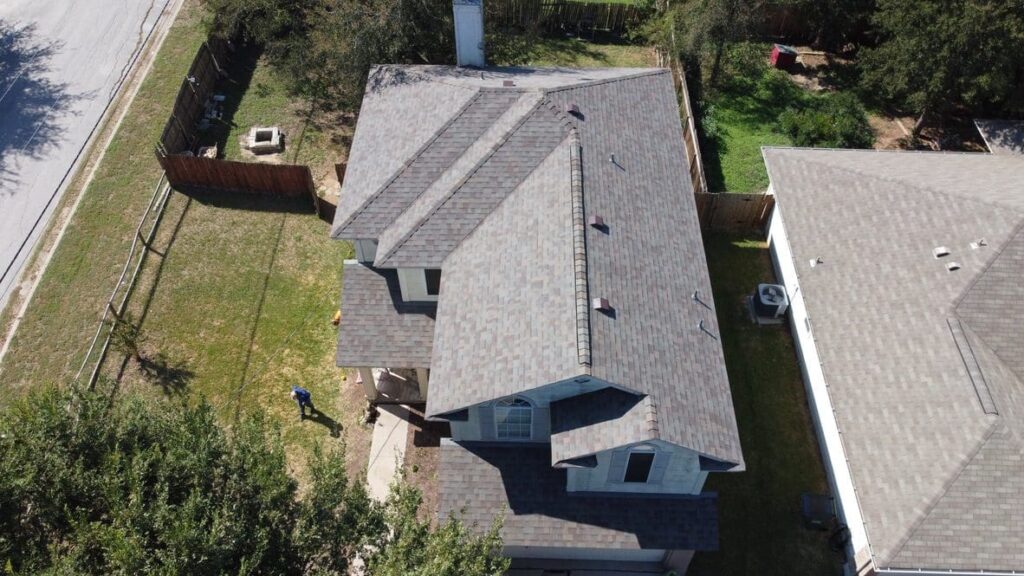
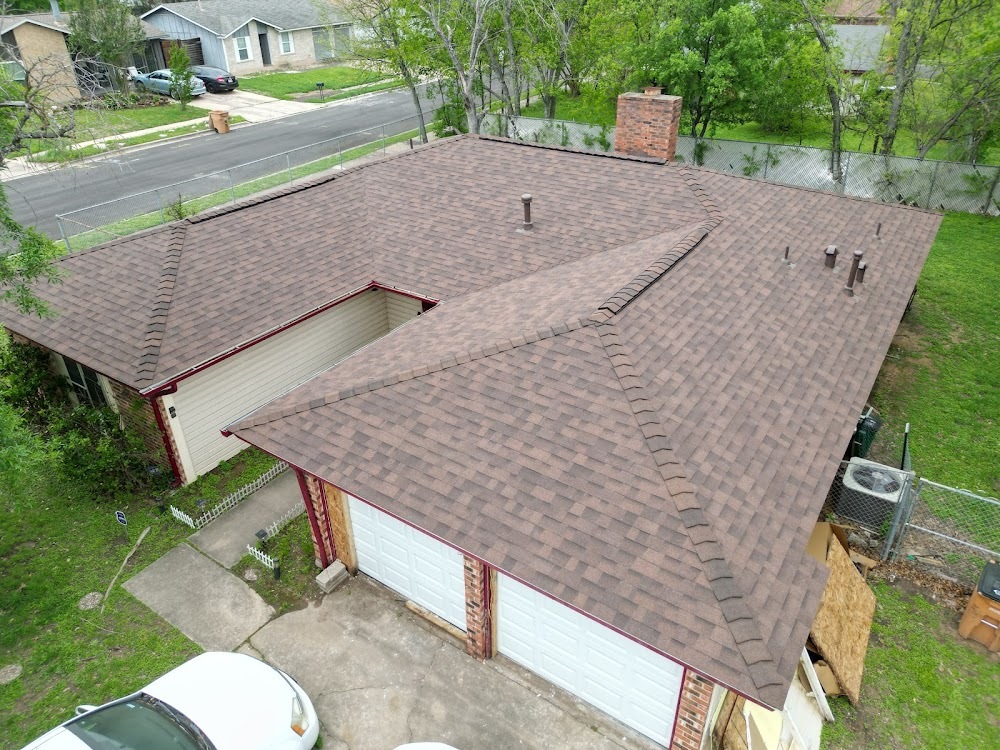
Architectural, or dimensional, shingles use multiple layers to create a thicker profile. They typically provide greater visual depth and may offer improved wind performance compared with basic three-tab products. They are frequently selected for full roof replacements.
Premium and Performance Shingles
Premium products may feature enhanced thickness, distinctive designs, improved algae resistance, modified asphalt, or higher impact ratings. Polymer-modified asphalt improves flexibility and durability, but performance still depends on proper handling and installation.
When researching asphalt roofing in Austin, TX, options, homeowners should request product data sheets rather than relying solely on general labels such as “premium” or “storm-resistant.”
Inspect the Roof Deck Before Installation
The roof deck provides the foundation for the roofing system. Soft, warped, delaminated, or water-damaged decking cannot reliably hold fasteners.
A contractor may not be able to identify every damaged area until the old roof covering is removed. The written estimate should therefore state:
- How decking will be inspected
- What type and thickness of replacement material will be used
- How replacement costs are calculated
- Whether approval is required before additional work begins
- How photographic documentation will be provided
This information helps homeowners prepare for legitimate change orders while discouraging vague or unexplained charges.
Ventilation and Insulation Affect Roof Performance
Balanced attic ventilation helps move heat and moisture out of the attic. A typical system combines intake vents near the eaves with exhaust vents higher on the roof. Adding exhaust ventilation without sufficient intake may not correct the underlying airflow problem.
Poor ventilation can contribute to heat buildup, moisture accumulation, mould growth, and deterioration of roofing components. It may also affect certain manufacturer warranty requirements.
Before the project begins, ask Genuine Texas Exteriors to assess ventilation requirements and inspect existing intake paths. Bathroom fans, kitchen exhaust systems, and dryer vents should discharge outdoors rather than release moisture into the attic.
Evaluate insulation separately because ventilation and insulation serve different functions. One cannot fully compensate for deficiencies in the other.
What Proper Asphalt Roofing Installation Should Include
Workmanship can be as important as the shingle selected. A complete asphalt roofing installation generally involves more than removing old materials and fastening new shingles.
Important components include:
- Protection for landscaping, siding, windows, and driveways
- Removal and responsible disposal of existing roofing materials
- Inspection and repair of the roof deck
- Underlayment suited to the roof and local requirements
- Extra water protection in vulnerable valleys or penetrations
- Proper starter shingles along eaves and rakes
- Correct flashing around walls, chimneys, skylights, and vents
- Manufacturer-specified fastener type, placement, and quantity
- Adequate ventilation
- Ridge-cap shingles designed for the selected roofing system
- Final cleanup and magnetic collection of loose nails
A contractor should explain whether an overlay is permitted and appropriate for the specific property. Installing asphalt roofing shingles over an existing roof may reduce tear-off work, but it can conceal damaged decking, add weight, and affect appearance or warranty coverage.
Compare Roofing Estimates Carefully
The lowest estimate isn’t necessarily the best value, and the highest price doesn’t automatically mean superior work. Homeowners should compare the scope, materials, exclusions, and protections in each proposal.
A detailed estimate should identify:
- Shingle manufacturer, product line, colour, and rating
- Underlayment and flashing materials
- Ventilation changes
- Decking allowances or unit prices
- Permit responsibility
- Tear-off and disposal procedures
- Start and completion expectations
- Payment schedule
- Workmanship and manufacturer warranties
- Cleanup and property-protection measures
Verify applicable licensing or registration requirements, as well as current insurance coverage. Homeowners should also ask who will supervise the job and whether employees or subcontractors will perform the work.
A qualified asphalt roofing contractor should answer technical questions clearly without using pressure, unverifiable claims, or promises that a roof cannot be damaged.
Review Warranty Terms Before Signing
Roofing projects may include two separate protections: a manufacturer’s material warranty and a contractor’s workmanship warranty.
Material warranties typically address qualifying manufacturing defects. They may not cover installation errors, storm damage, improper ventilation, structural movement, or unauthorised alterations. Workmanship warranties address installation-related issues but vary by contractor.
Before signing, determine:
- What each warranty covers and excludes
- Whether labour, disposal, and accessories are included
- Whether coverage becomes prorated
- Whether the warranty can transfer to a future owner
- What maintenance or registration is required
- Who handles a claim
- Whether using non-system components affects coverage
Keep the contract, invoices, warranty documents, product labels, inspection records, and project photographs in a secure file.
Consider Appearance and Neighbourhood Requirements
Shingle colour can affect curb appeal and how the roof relates to brick, stone, siding, and trim. Small samples may look different when installed across a large roof, particularly under bright sunlight.
Ask to view completed roofs or use a manufacturer’s visualisation tool when available. Homeowners should also check deed restrictions, architectural review requirements, and applicable local rules before ordering materials. Obtain written approval when required.
Conclusion
A successful roof replacement starts with a thorough evaluation of the entire roofing system. Austin homeowners should consider heat exposure, hail risk, ventilation, decking, flashing, installation quality, and warranty terms. When properly selected and professionally installed, asphalt shingles can provide reliable protection, lasting curb appeal, and practical value. Carefully reviewing estimates can also help prevent unexpected costs.
Homeowners seeking a professional roof assessment and a clear, detailed estimate can explore Genuine Texas Exteriors on Google Maps to learn more about the company and its Austin-area roofing services.
Frequently Asked Questions
1. How long do asphalt shingles last in Austin?
Service life varies based on product quality, installation, roof slope, ventilation, maintenance, tree coverage, and weather exposure. Manufacturer ratings help with comparisons, but they should not be interpreted as guaranteed service lives. Regular inspections and timely repairs can help prevent minor issues from causing broader damage.
2. Are impact-resistant shingles worth considering?
They may be valuable for properties exposed to hail. Impact-rated shingles are tested for resistance to specific laboratory impacts, but they are not hail-proof. Compare the rating, added cost, warranty language, and potential insurance implications. Confirm any premium adjustment directly with the insurer before purchase.
3. Should old shingles be removed before installing a new roof?
Tear-off is often preferable because it lets you inspect the roof deck, flashing, and penetrations. An overlay may be allowed in limited circumstances, but it can conceal defects and add weight. Applicable rules, manufacturer instructions, roof condition, and warranty terms should guide the decision.
4. How can homeowners tell whether an estimate is complete?
A complete estimate names the exact products, accessories, installation procedures, exclusions, warranties, payment terms, and potential additional costs. It should address decking, flashing, ventilation, disposal, permits, cleanup, and property protection. Clarify vague phrases such as “replace roof as needed” in writing.
5. Can a new asphalt roof reduce cooling costs?
A roof may influence heat gain, especially when reflective products or lighter colors are used. However, cooling performance also depends on attic insulation, ventilation, air sealing, ductwork, shading, and equipment efficiency. Homeowners should be cautious of any claim that shingles alone will produce a specific energy savings.
6. When should a newly installed roof be inspected?
Homeowners should conduct visual checks from the ground after major storms and arrange professional inspections when damage is suspected. Avoid climbing onto the roof, as this creates a fall risk and may damage shingles. An inspection is also useful after work involving solar panels, antennas, chimneys, or other roof penetrations.
7. What should asphalt roofing services include after installation?
Post-installation service should include a final walkthrough, cleanup, debris removal, documentation of completed work, warranty information, and an explanation of whom to contact if any concerns arise. Homeowners should confirm that the project did not damage vents, flashing, gutters, siding, or landscaping.